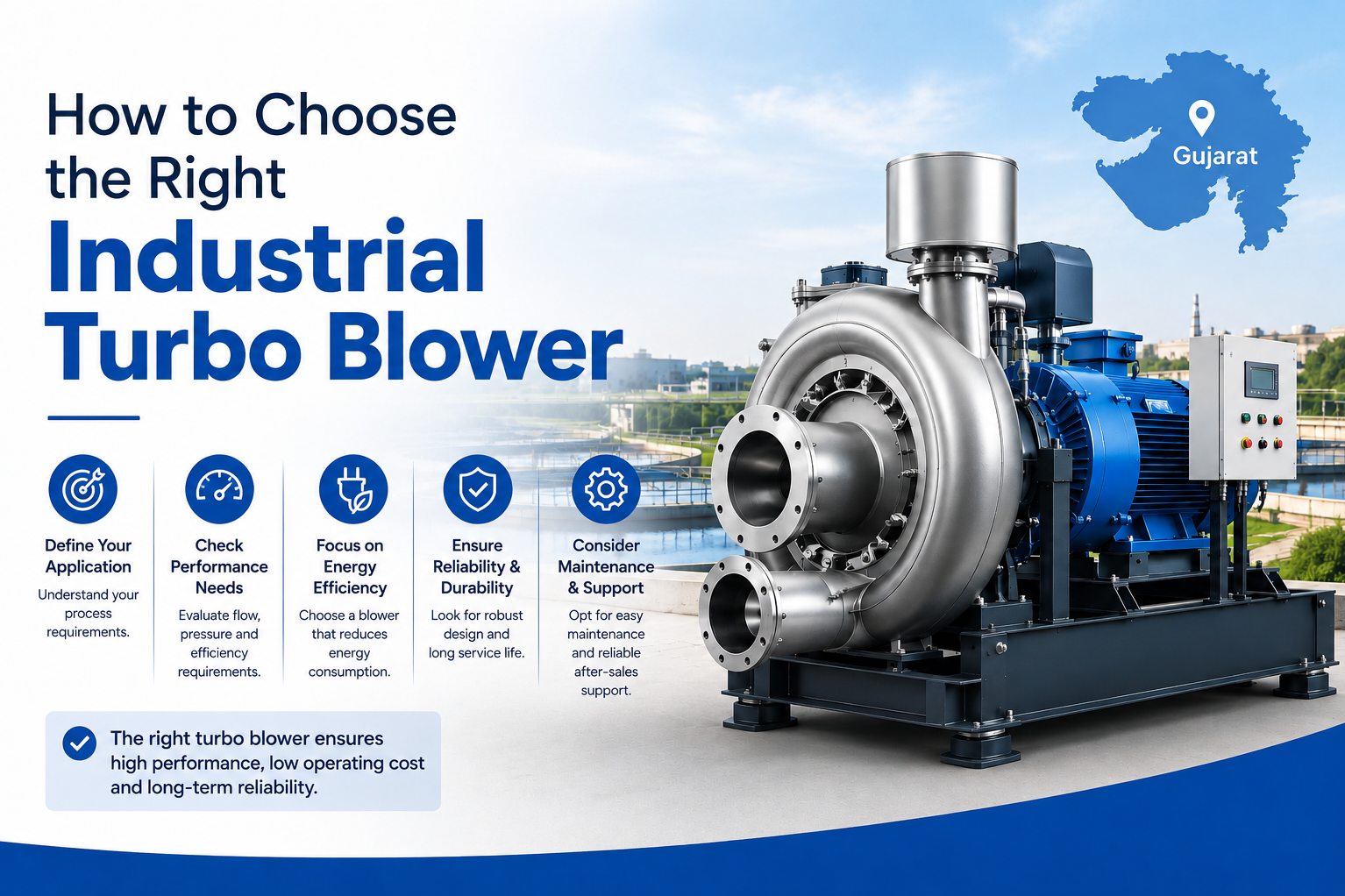
Choosing the right industrial turbo blower is essential for improving operational efficiency, reducing energy consumption, and maintaining reliable performance in industrial processes. Different industries require different airflow capacities and pressure levels, so selecting a suitable system can directly affect productivity and operating costs.
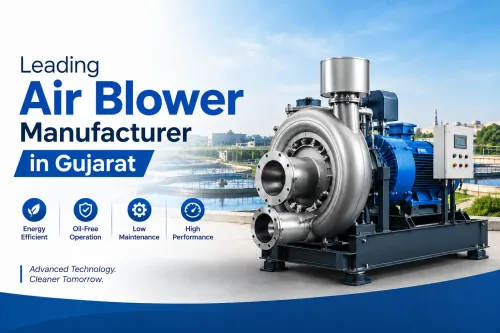
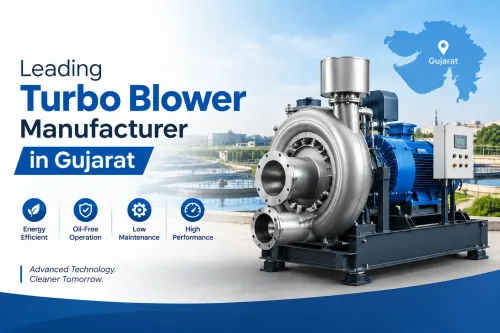
A Industrial Turbo Blower is widely used in wastewater treatment plants, manufacturing facilities, chemical processing units, and other industrial applications. Its high-speed operation and efficient airflow delivery make it a valuable solution for processes that require a continuous and controlled air supply.
However, not every blower is suitable for every application. Before making a purchase, businesses should evaluate their airflow requirements, operating pressure, energy efficiency, installation space, and maintenance expectations to find the most appropriate solution.
Understanding these factors can help industries make an informed investment and achieve long-term value. A well-selected industrial Turbo Blower can support stable operations, improve process performance, and help businesses manage their energy costs more effectively.
Understand Your Airflow and Pressure Requirements
The first step in choosing an industrial Turbo Blower is identifying the airflow capacity required for your application. Airflow is commonly measured in cubic metres per minute (m³/min) or cubic metres per hour (m³/h). Selecting the correct capacity helps ensure that equipment receives the air volume needed for reliable operation.
Pressure requirements are equally important because different industrial processes need different levels of air pressure. For example, wastewater aeration systems may require a specific pressure to overcome water depth and pipeline resistance. Understanding these requirements helps narrow down suitable blower models.
It is also important to consider whether your process needs a constant air supply or variable airflow throughout the day. Some industrial operations experience changing demand based on production schedules, wastewater loads, or process conditions.
Before contacting a supplier, collect information about your existing system, including operating pressure, required airflow, pipeline dimensions, and daily operating hours. Accurate details make it easier to compare equipment and avoid choosing a blower that is either undersized or unnecessarily powerful.
Evaluate Energy Efficiency and Operating Costs
Energy consumption is one of the most important factors when selecting an industrial Turbo Blower. Since many industrial blowers operate for extended periods, even small differences in power consumption can influence overall operating expenses. Reviewing efficiency data helps businesses understand the potential long-term cost of running the equipment.
Look beyond the initial purchase price and evaluate the total cost of ownership. This includes electricity consumption, installation, maintenance, replacement components, and expected service life. A model with a higher initial price may offer better long-term value if it delivers suitable performance with lower operating costs.
Modern high-speed Turbo Blower designs may incorporate efficient impellers, advanced motors, and intelligent control systems. Depending on the model and application, these features can help improve airflow management and reduce unnecessary energy use. Always compare manufacturer-provided performance curves and efficiency figures under your expected operating conditions.
Variable demand should also be considered when assessing energy performance. If your process frequently requires less than maximum airflow, a suitable control system may help match blower output to actual demand. Ask the supplier for performance information across the expected operating range rather than relying only on the maximum efficiency rating.
Choose the Right Blower Technology
Industrial blowers are available in different designs, and the best option depends on the process requirements. Turbo Blower systems are often considered for applications requiring high-speed operation and efficient delivery of large volumes of air. However, the right technology should be selected by comparing the pressure, flow, and operating conditions of each application.
Air foil bearing Turbo Blower technology is one option used in certain high-speed blower designs. These systems use an air film to support the rotating shaft during operation and can avoid conventional oil lubrication within the bearing system. Depending on the design, this may help support oil-free air delivery and reduce some routine maintenance requirements.
Other blower technologies may be better suited to applications with different pressure ranges, airflow needs, or operating environments. For this reason, businesses should not select equipment based on technology names alone. A proper comparison should include efficiency, reliability, operating limits, service support, and compatibility with the existing system.
Discuss the advantages and limitations of each option with an experienced manufacturer or supplier. Ask for technical documentation and confirm that the proposed Turbo Blower can meet your process requirements under both normal and peak operating conditions. This helps reduce the risk of selecting equipment that does not perform as expected after installation.
Consider the Industrial Application and Environment
The application plays a major role in determining which Turbo Blower is suitable. In wastewater treatment plants, blowers are commonly used to supply air for biological aeration processes. A suitable system must provide the required airflow and pressure while responding to changing treatment loads and maintaining dependable operation.
In manufacturing facilities, blowers may support pneumatic conveying, combustion-related processes, drying, or other air-handling operations, depending on the system design. Each application has its own performance requirements, so it is important to match the blower specifications to the actual process instead of relying on a general-purpose selection.
The installation environment also deserves careful attention. High ambient temperatures, dust, moisture, corrosive substances, and limited ventilation can affect equipment performance and service life. Review the manufacturer's environmental limits and determine whether additional filtration, cooling, or protective measures are required.
Space and noise levels should also be assessed before installation. A compact Turbo Blower may be beneficial where floor space is limited, while sound levels and vibration may influence where the equipment can be placed. Confirm the foundation, ventilation, electrical supply, and maintenance access requirements before finalising the installation plan.
Review Maintenance, Reliability, and Technical Support
Maintenance requirements should be evaluated before purchasing an industrial Turbo Blower. Different designs may require different inspection schedules, replacement parts, and servicing procedures. Understanding these requirements helps businesses plan maintenance activities and minimise the risk of unexpected interruptions.
Ask the supplier about recommended service intervals, component availability, warranty coverage, and technical assistance. Access to trained service personnel and genuine replacement parts can be especially important for facilities that depend on continuous operation. A reliable support network can help reduce downtime when maintenance or troubleshooting is required.
It is also useful to review the blower's monitoring and protection features. Depending on the model, these may include temperature monitoring, vibration monitoring, pressure sensors, and control-system alarms. Such features can help operators identify abnormal operating conditions and respond before a minor issue affects the wider process.
Before making a final decision, compare the technical specifications and support services offered by different suppliers. Check the operating range, efficiency data, warranty terms, and availability of commissioning support. Choosing a Turbo Blower with suitable technical assistance can help protect your investment and support dependable performance over time.
Compare Suppliers and Product Specifications
Selecting the right supplier is just as important as selecting the equipment. An experienced industrial blower supplier should understand your application and provide recommendations based on measurable requirements. Avoid making a decision based only on price or broad claims about performance and efficiency.
Request a detailed technical quotation that includes airflow capacity, discharge pressure, motor power, efficiency information, dimensions, electrical requirements, and control features. If the blower will operate alongside existing equipment, confirm its compatibility with the current piping, electrical system, and control arrangements.
Ask whether the supplier can provide performance curves, installation guidance, commissioning support, and after-sales service. These details make it easier to compare different Turbo Blower options on a consistent basis. They also help ensure that the equipment is selected according to real operating conditions rather than assumptions.
For industrial buyers in India, it can be useful to work with a manufacturer or supplier that understands local operating requirements and can provide accessible technical support. Review the company's product range and documentation, and confirm that the proposed model meets your required specifications before placing an order.
Conclusion
Choosing the right industrial Turbo Blower requires careful consideration of airflow, pressure, energy efficiency, technology, application conditions, and maintenance needs. Evaluating these factors together helps businesses select equipment that supports reliable performance and fits their operational goals.
Before making a purchase, define your process requirements and compare product specifications from qualified suppliers. Consider both the initial investment and the long-term cost of operation, and confirm the availability of technical assistance and replacement parts.
Usha Neuros provides industrial blower solutions for applications that require dependable airflow and efficient operation. Explore the available product range
Keywords